When Maintenance Stops Being the Smart Option for Your Business
There comes a point with every commercial flat roof where the real question isn’t, “Can we fix it?” but, “Should we keep fixing it?”
If you own or manage a building in South Dakota, North Dakota, Iowa, Wisconsin, or Minnesota, you know the pattern. A leak shows up. You call for a repair. It holds for a while. Then another leak appears somewhere else—or the same spot opens up again after another round of snow, ice, or hail.
Each individual repair invoice might feel manageable. What’s harder to see is the total cost of staying on that path over five or ten years: repeated service calls, disruption to tenants or operations, hidden damage inside the building, and the constant risk that the next storm will be the one that pushes things over the edge.
This blog is designed to help you answer one question clearly:
Is it time to stop patching and start planning for replacement?
Why “Just One More Repair” Can Be the Expensive Option
On paper, repairs look cheaper than replacement. A few hundred or a few thousand dollars versus a six-figure capital project. But roofs don’t live on paper. They live in real conditions, in real weather, over real businesses.
A flat roof costs you money in three ways:
First, there’s the obvious cost of the repair itself. Every time a crew goes up to chase another leak, you’re paying for labor, materials, travel, and overhead. One visit a year might be fine. Three, four, or five visits start to add up quickly.
Second, there’s the cost of hidden or secondary damage. Water rarely stays where you can see it. It can migrate under membranes, saturate insulation, rust metal decks, damage drywall, flooring, and finishes, or compromise equipment and inventory. By the time you see a stain on the ceiling, the problem above can be much larger.
Third, there’s operational disruption and liability. Leaks can shut down production areas, disrupt tenants, or create slip-and-fall hazards. Even if you manage to keep things running, you’re diverting staff time and attention to move buckets, rearrange offices, and manage complaints.
When you look at it that way, the “cheap” repair path is only cheap if:
- Repairs are infrequent, and
- The roof still has enough life left to justify each new dollar you put into it.
Once that changes, maintenance stops being an investment and becomes a sunk cost.
The Key Decision Factors (Without the Jargon)
You don’t need to be a roofing expert to have an intelligent conversation about repair versus replacement. You do need a clear picture of a few basic factors.
Age of the roof vs. expected service life.
Every system has a typical lifespan under normal conditions. If your roof is early or mid-life and otherwise in good shape, repairs can absolutely be the right call. If it’s at or beyond its expected service life, every new dollar you put into patches is working against time.
Frequency and pattern of leaks.
An isolated leak after a specific storm event is one thing. Multiple leaks every season, in different parts of the building, tell a different story. If you’re seeing a pattern of recurring issues, that’s a sign the system as a whole is breaking down.
Overall condition of the roof surface.
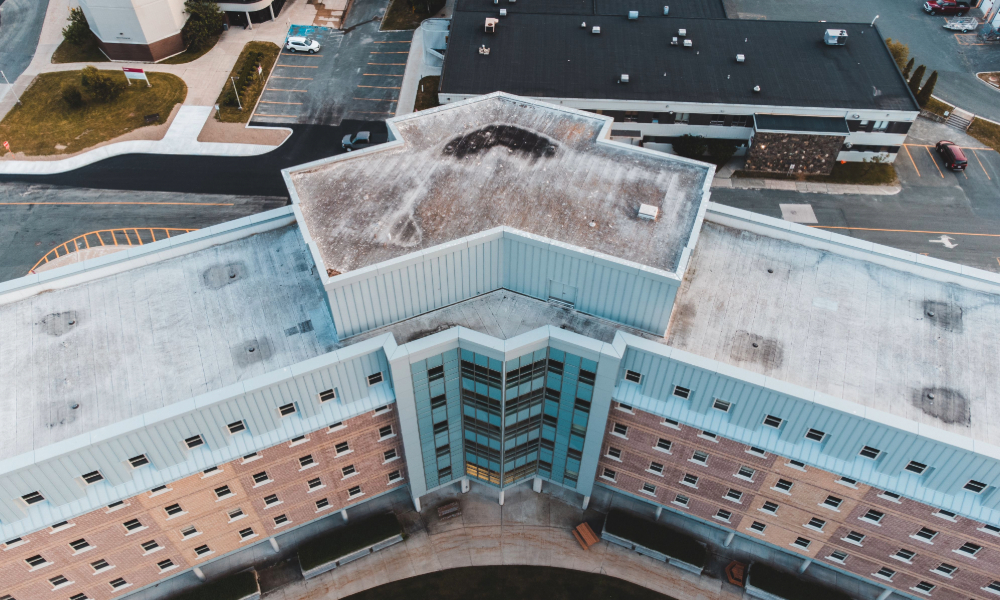
When a professional walks the roof, they’re looking for things like open seams, blisters, cracks, ponding areas, and damage around penetrations and edges. If problems are concentrated in a few areas, targeted repairs can make sense. If issues are widespread, that points toward a system-level problem.
Condition of the insulation and deck.
A roof isn’t just the membrane you see. Underneath, you have insulation and a structural deck. If water has saturated the insulation or started to affect the deck, you’re dealing with more than a surface problem. At that point, replacement—or at least partial replacement—is often the safer and more economical path.
Warranty status.
If your roof is still under a manufacturer’s warranty, there may be specific requirements about who can work on it and how. Sometimes, well-intentioned quick fixes can void coverage. Understanding your warranty can influence whether repair, restoration, or replacement is the right move.
Your plans for the building.
If you know you’ll be selling the property in the near term, your strategy might differ from a long-term hold. A well-documented, recently upgraded roof can be an asset in a sale. On the other hand, if you’re trying to bridge a short window before a transition, certain repair strategies may make more sense.
When Maintenance and Repairs Still Make Financial Sense
There’s nothing wrong with staying in a “repair and maintain” mode when the conditions are right. In fact, a good maintenance program can dramatically stretch the life of a solid roof and delay the need for replacement.
Repairs tend to be the smarter choice when:
- The roof is relatively young for its system type.
- Leaks are isolated, and the rest of the surface is in good condition.
- Drainage is working properly, with no chronic ponding or structural concerns.
- There’s no evidence of widespread moisture in the insulation or problems with the deck.
In this situation, repairs are part of a proactive plan. You’re catching small issues early, addressing them correctly, and tracking roof condition over time. You’re putting modest, predictable dollars into maintenance to protect a much larger asset.
This is especially important in a climate like South Dakota, North Dakota, Iowa, Wisconsin, and Minnesota, where roofs take a beating from snow, ice, wind, and temperature swings. Scheduling regular inspections—typically spring and fall—and resolving the issues found is one of the best investments you can make.
Warning Signs That Maintenance Is No Longer an “Investment”
At some point, the math flips. The same maintenance and repair pattern that once made sense starts working against you.
Here are the red flags we see most often when a roof has passed that tipping point:
You’re calling for repairs multiple times a year.
If service calls have become part of your regular operating rhythm, it’s a sign the system is failing on a broader level. You might fix one leak, only to have another appear nearby a month later. Each trip is another invoice and another disruption.
Leaks are showing up in different parts of the building.
When problems move beyond a single area, it usually means the underlying materials have aged out or been compromised across a wider section. Patching each new spot is like playing whack-a-mole with your budget.
You have chronic ponding or drainage issues.
If water is sitting on your flat roof for days after every rain or thaw, the risk of leaks—and structural concerns—goes up. Repeated attempts to seal around those areas without correcting the drainage often become a recurring cost center.
Insulation is wet or the deck is questionable.
When an inspection reveals wet insulation or signs that the deck has started to rust, rot, or otherwise deteriorate, you’re beyond what surface repairs can responsibly solve. Continuing to patch over those conditions increases both risk and long-term cost.
You’re out of warranty, or it’s been voided.
Once there’s no manufacturer safety net, you’re on your own for every dollar spent and every failure that follows. In that scenario, it can be smarter to invest in a new system with a fresh warranty than to keep funding repairs with no coverage behind them.
From a financial standpoint, an easy way to think about it is this: if your annual repair spend—plus the risk and cost of disruption—is starting to rival what a replacement would cost spread out over ten, fifteen, or twenty years, it’s time to seriously consider replacement.
How Wolf River Construction Helps You Decide (Not Guess)
You don’t have to answer the repair-or-replace question alone or based on gut feeling. There is a structured way to evaluate your flat roof and make a clear, defensible decision.
When Wolf River Construction assesses a commercial flat roof in South Dakota, North Dakota, Iowa, Wisconsin, or Minnesota, we focus on three things:
First, we document what’s actually happening. That means a full roof walk, photos of existing conditions, a review of problem areas, and, when appropriate, additional testing to understand what’s going on beneath the surface. We look at age, visible wear, drainage, penetrations, and edge details.
Second, we connect those findings to your business reality. How often you’ve been calling for service. How long you plan to hold the property. The kind of operations or tenants under that roof and their tolerance for disruption. We translate technical conditions into business risk.
Third, we lay out your options in plain language. That often includes a maintain-and-monitor path, a strategic repair plan, and one or more replacement scenarios. The goal is to show you what each option costs now, what it likely means over the next several years, and how it aligns with your budget and plans.
You end up with a clear roof condition picture and a roadmap, not a sales pitch for whatever is most convenient to install.
Planning a Flat Roof Replacement Like a Capital Project
When it is time to replace, the process should feel like any other well-managed capital improvement project—not a fire drill.
That starts with timing. In the Upper Midwest, seasons matter. Whenever possible, you want to plan major flat roof work in a window that minimizes weather risk and operational impact. Early planning gives you more flexibility.
Next is phasing and logistics. On multi-tenant or occupied buildings, we can often phase work so only certain areas are affected at a time, reducing disruption. Clear scheduling, communication, and safety planning keep your business running while the roof is being upgraded.
Then there’s budgeting and financing. With a solid condition assessment in hand, you can align roof replacement with your capital plan instead of reacting to emergencies. Understanding the expected lifespan of the new system, any available warranty coverage, and your ongoing maintenance plan helps you see the project as a long-term asset, not just a line item.
Finally, a new roof is the start of a new cycle, not the end of the story. Pairing installation with a maintenance program—regular inspections and basic upkeep—helps you protect that investment and avoid repeating the same pattern a decade from now.
You Don’t Have to Guess: Get a Flat Roof Condition Assessment
Deciding between flat roof repair and replacement is ultimately about controlling risk and total cost of ownership, not just comparing today’s invoices.
If you’re in South Dakota, North Dakota, Iowa, Wisconsin, or Minnesota and you’re wondering whether “one more repair” still makes sense, the next step is simple: get clear data and a straightforward plan.
Wolf River Construction can:
- Assess the current condition of your roof, above and below the surface.
- Show you how your recent repair history and risk profile stack up.
- Outline repair, maintenance, and replacement options in financial terms you can plan around.
You don’t have to wait for the next storm or another leak to make a decision.
Contact Wolf River Construction today to schedule a flat roof condition assessment and find out whether it’s time to keep maintaining, strategically repair, or move forward with replacement on your terms.