How to Think About the “Right” Roof for Your Building
Commercial roofs don’t get much attention when they’re doing their job. They sit above your business day after day—through heat, hail, snow, and freeze–thaw cycles—quietly protecting everything underneath. Then one day you notice staining on a ceiling tile, a drip in a hallway, or a utility bill that keeps creeping up, and suddenly the roof is at the top of your to‑do list.
If you own or manage a building in Minnesota, Wisconsin, Iowa, North Dakota, or South Dakota, you already know that the Midwest is tough on commercial roofing systems. Wide temperature swings, heavy snow loads, high winds, and strong sun demand more from a roof than a mild climate ever will. The challenge is that when you finally start looking into your options, it can feel like a sea of acronyms and competing sales pitches: EPDM, TPO, PVC, metal, coatings, and more.
At Wolf River Construction, we help business owners and property managers across the Upper Midwest sort through those choices every day. This blog is designed to give you a clear, plain‑language comparison of the most common commercial roofing systems and how to think about which one fits your building, your budget, and your long‑term plans.
Before comparing materials, it helps to understand why commercial roofs are a different conversation than residential ones. Most commercial buildings in our region have flat or low‑slope roofs. Instead of steep shingles that shed water quickly, these roofs rely on carefully designed drainage and large, continuous surfaces. They often support mechanical equipment like HVAC units, vents, and solar, which means more penetrations in the roof and more foot traffic from maintenance crews.
A commercial roof is not just about keeping water out. It is also part of your building’s energy performance, fire safety, and structural system. A leak over an office ceiling is one thing; a leak over a data room, a manufacturing line, or tenant space is something else entirely. The systems we install in Minnesota, Iowa, Wisconsin, North Dakota, and South Dakota have to handle snow loads, ice dams, ponding water, wind uplift, and the occasional hailstorm—all while supporting a warranty that means something if there is a problem down the road.
With that context, let’s look at the major types of commercial roofing you will hear about and where they tend to make sense.
EPDM: The Workhorse Rubber Roof
EPDM stands for Ethylene Propylene Diene Monomer, but most people simply call it “rubber roofing.” It has been a staple on commercial buildings for decades. EPDM is a single‑ply membrane, usually black, that comes in large rolls and is adhered or mechanically fastened to the roof deck.
One of the biggest strengths of EPDM is its track record. It has been installed on millions of square feet of commercial roof nationwide, including throughout the Upper Midwest, and it is known for its durability and flexibility. That flexibility matters in our climate because your roof surface expands in the summer sun and contracts in deep winter cold. A well‑installed EPDM roof can ride those changes for many years without cracking.
On the flip side, traditional black EPDM can absorb heat, which may not be ideal if your energy strategy focuses on keeping cooling costs down. White EPDM and other reflective options exist, but if maximizing reflectivity and energy efficiency is a top priority for you, you may also want to look at TPO and PVC. EPDM can also be more vulnerable to certain chemicals and oils, so the type of business you run and what is vented or stored on the roof matters.
For many office buildings, schools, and warehouses in Minnesota, Wisconsin, Iowa, North Dakota, and South Dakota, EPDM remains a solid, time‑tested choice—as long as it is installed and detailed correctly by a qualified contractor who knows how to handle seams, penetrations, and flashing in our weather.
TPO: The Popular Reflective Option
TPO, or Thermoplastic Polyolefin, is another single‑ply membrane that has grown rapidly in popularity over the last couple of decades. It is typically white or light‑colored, which gives it a high reflectivity. That can translate into lower cooling loads in the summer, especially on large, low‑slope roofs with a lot of sun exposure.
Like EPDM, TPO comes in rolls and can be mechanically fastened or adhered, but the seams are welded with heat to create a continuous surface. When installed correctly, those heat‑welded seams can be very strong and resistant to leaks. The reflective surface also helps minimize heat gain, which can be attractive for retailers, offices, and light industrial buildings that want to control energy costs and keep rooftop temperatures down for equipment.
TPO, like any material, is not a one‑size‑fits‑all solution. Different manufacturers use slightly different formulations, and performance depends heavily on installation quality. A white surface also shows dirt and debris more quickly, which means you should plan on regular inspections and maintenance to keep the membrane in good condition and performing as expected. In the Midwest, where roofs can spend months under snow, thinking about how TPO will handle snow loads, ice, and freeze–thaw cycles is also important—which is where local experience really comes into play.
PVC: Chemical Resistance and Durability
PVC, or Polyvinyl Chloride, is another thermoplastic single‑ply membrane that looks similar to TPO at first glance, often white or light‑colored with welded seams. Where PVC stands out is its resistance to certain chemicals, greases, and oils. For restaurants, food processing facilities, and some industrial buildings in Minnesota, Iowa, Wisconsin, North Dakota, and South Dakota, that can be a decisive factor.
PVC has a long history in commercial roofing and, when properly formulated and installed, can be very durable. Its welded seams create a monolithic layer, and the material itself tends to offer excellent resistance to ponding water and many contaminants. That makes it appealing on roofs where standing water is a challenge or where rooftop equipment can introduce substances that would break down other membranes more quickly.
As with TPO, not all PVC is identical, and product quality along with correct installation are key. PVC can sometimes carry a higher material cost than other single‑ply options, so it is important to weigh that against its advantages for your specific building. For facilities where chemical resistance and long‑term durability are critical, PVC can be an excellent fit.
Metal Roofing for Commercial Buildings
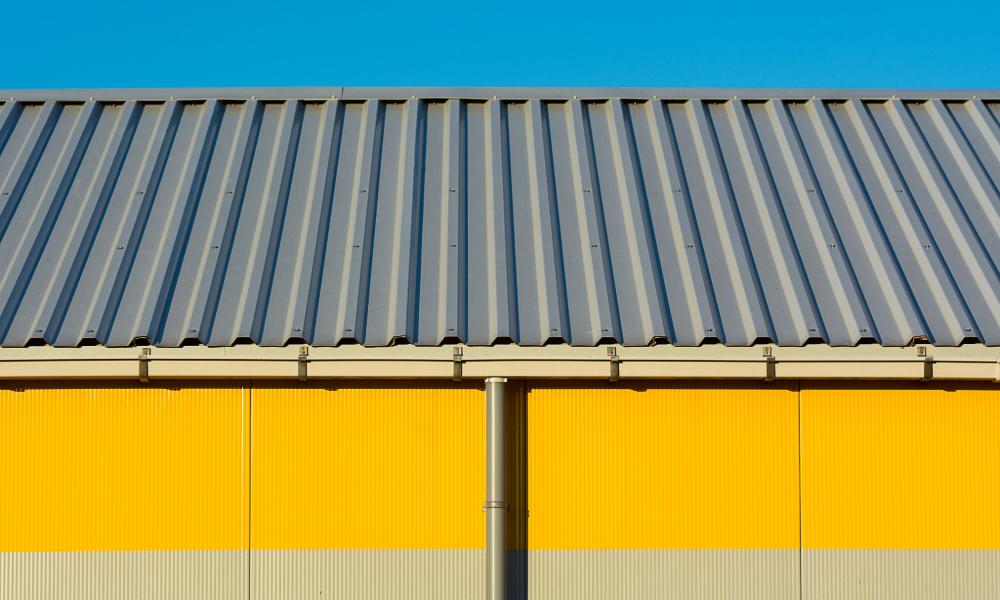
When people think about metal roofing, they often picture agricultural buildings, warehouses, or modern architectural designs—but metal plays a major role across commercial properties in the Upper Midwest. Standing seam metal roofs, in particular, are common on sloped commercial roofs, retail centers, institutional buildings, and mixed‑use properties.
Metal roofing systems offer several benefits. They are highly durable, can shed snow efficiently when designed correctly, and can provide long service lives with relatively low maintenance. Many are available with reflective coatings and color options that support both aesthetics and energy efficiency. In a region like Minnesota, Wisconsin, Iowa, North Dakota, and South Dakota, where snow and ice are a reality, properly engineered metal roofs can handle heavy loads and reduce the risk of ice buildup in certain applications.
Metal is not automatically the best choice for every structure. Upfront costs can be higher than some single‑ply systems, and detailing around penetrations, edges, and transitions requires real expertise. Snow management must be thought through carefully, including the use of snow guards and the safety of areas below. When a metal roof is right for the building and installed by a contractor who understands both manufacturer specifications and local snow and wind conditions, it can provide an attractive and long‑lasting solution.
Modified Bitumen and Roof Coatings
Beyond single‑ply membranes and metal, you will also encounter modified bitumen systems and roof coatings on commercial buildings. Modified bitumen can be thought of as an evolution of traditional built‑up roofing, using asphalt‑based sheets that are reinforced and modified for greater flexibility and durability. These systems are typically installed in layers, either torched, cold‑applied, or self‑adhered, and can offer robust protection, especially on smaller low‑slope roofs or where a multi‑layer assembly is desired.
Roof coatings, on the other hand, are often used to extend the life of an existing roof rather than as a stand‑alone primary roof on a new construction project. Acrylic, silicone, and other elastomeric coatings can be applied over certain types of aging roofs to improve reflectivity, seal minor cracks, and add years of service when the underlying system is still structurally sound. In a place like the Midwest, where replacing a roof in the middle of winter is not always practical, coatings can sometimes be part of a phased strategy to bridge from one major replacement cycle to the next.
The key with coatings is honest evaluation. Not every roof is a good candidate, and using a coating as a bandage on a failing system can create more problems than it solves. A local contractor who inspects your roof in person can help determine whether a coating is a smart investment or if it is time to plan for a full replacement.
Looking at all these options—EPDM, TPO, PVC, metal, modified bitumen, coatings—it is natural to ask, “Which one is best?” The answer is that the best system is the one that fits your specific building, use case, climate, and budget over time.
A warehouse in North Dakota with minimal interior finishes has different needs than a medical office in Minnesota. A shopping center in Wisconsin with multiple rooftop units and high tenant expectations will be evaluated differently than a small industrial shop in Iowa. Factors like roof slope, existing deck type, drainage, access, chemical exposure, desired warranty length, and your plans for the property over the next ten to twenty years all play a role.
In the Upper Midwest, climate adds another layer. Snow loads, ice, dramatic temperature swings, and hail are not theoretical—they are annual events. That reality shapes everything from how seams are detailed, to the choice of insulation and cover boards, to how we protect the roof from damage during routine maintenance and service work. Working with a contractor who lives and works in Minnesota, Wisconsin, Iowa, North Dakota, and South Dakota means you are partnering with a team that designs with those conditions in mind, not just what looks good on a brochure.
Why a Local, Certified Contractor Matters
No roofing material is better than its installation. The most advanced membrane or metal panel will underperform if seams are rushed, details are ignored, or manufacturer guidelines are not followed. That is why working with a local, certified contractor is just as important as choosing the right system on paper.
At Wolf River Construction, we bring years of hands‑on experience with commercial roofing in the Midwest. We understand local codes and inspection practices, we know how our weather behaves, and we maintain relationships with trusted manufacturers and suppliers. That allows us to match the right system to the right building, design details that stand up to real‑world conditions, and support warranties that actually mean something.
Being local also means we are here for the long haul. When you call with a question, need a repair, or are thinking about an expansion, you are talking to a team that knows your roof, your site, and your community. We are not flying in after a storm and disappearing when the last check clears. Our name and reputation are built on projects across Minnesota, Iowa, Wisconsin, North Dakota, and South Dakota, and we take that responsibility seriously.
Your Next Step: Start with a Professional Roof Evaluation
If you are starting to question the condition of your commercial roof, or you are planning a new building or expansion, you do not need to become an expert in every acronym. Your first step is to get clear, specific information about your own roof: its current state, remaining useful life, and the options available when it is time to repair, restore, or replace.
Wolf River Construction can walk your roof, document existing conditions, and talk with you about how your building is used, what your long‑term plans are, and what your budget looks like over time. From there, we can recommend systems—EPDM, TPO, PVC, metal, modified bitumen, coatings, or a combination—that make sense for your particular property in our Midwest climate.
A well‑designed commercial roof is not just an expense; it is an asset that protects your business, your tenants, and your investment year after year. When you are ready to talk about what is over your head and how to make it work harder for you, Wolf River Construction is here to help.