Why Timing and Financing Matter So Much for Commercial Roofs
In Minnesota, Wisconsin, Iowa, North Dakota, and South Dakota, commercial roofs don’t fail quietly. They leak over inventory rooms. They compromise tenant spaces. They interrupt operations in ways that show up on your P&L.
Most owners and property managers know when their roof is aging or when a hail or windstorm has “pushed it over the edge.” The problem isn’t awareness. It’s this tug-of-war between, “We really need to fix this,” and, “Can we actually afford to do it right now?”
That’s the gap our commercial financing and insurance support is designed to close at Wolf River Construction. Our goal is simple: if your building needs work, especially after a storm, money and paperwork shouldn’t be the reason you’re stuck with tarps and buckets.
Let’s walk through how financing and insurance can work together to move your roofing project forward without putting your business at risk.
Commercial roofs in the Upper Midwest live a harder life than most. Between heavy snow loads, freeze–thaw cycles, ice dams, spring rains, and summer hail, it’s not unusual to see roofs near the end of their useful life start to accelerate quickly once weather finds a weak spot.
Industry data suggests typical commercial roof systems, depending on materials and maintenance, are often designed for something like 20–30 years of service life, but deferred maintenance can shorten that window significantly. When minor damage compounds—especially after hail or wind events—the cost to “wait one more season” can jump from a manageable repair to a full replacement that disrupts your business far more than you planned for.
On the financial side, owners and managers are juggling:
- Cash reserves and operating capital
- Tenant expectations and lease obligations
- Insurance deductibles and policy limits
- The opportunity to use a roofing project to improve energy performance
It’s understandable that many businesses try to patch and defer. But patching doesn’t change the math; it just moves the bill into the future, usually with interest in the form of additional damage, interior repairs, and emergency disruption.
That’s why we built our commercial roofing financing options and insurance-claims support to work together. You shouldn’t have to choose between protecting your property and protecting your cash flow.
Business Loan Financing for Roofing and Storm Recovery
A full commercial roof replacement or major storm restoration is a meaningful investment. For many owners across Minnesota, Wisconsin, Iowa, North Dakota, and South Dakota, writing a six-figure check all at once isn’t realistic—or it doesn’t make sense relative to other priorities in the business.
Our business loan options are designed to smooth that out.
Instead of a single, painful outlay, a loan lets you spread the cost over time with predictable monthly payments. You move the project out of the “someday” category and into a defined budget line item, while your building starts benefiting from a dry, durable roof immediately.
Here’s what that can look like in real life.
A small retail center in Wisconsin gets hammered by hail. The owner knows the roof is already in the later half of its life. There are active leaks, tenants are calling, and the longer it drags on, the more risk there is to interiors and inventory. The insurance policy will help, but there’s still a deductible and some code-related upgrades that won’t be fully covered.
Instead of draining reserves, the owner:
- Uses our business loan partner to secure a financing package with no upfront costs on the construction side.
- Locks in a competitive rate and spreads the remaining cost over a term that fits the center’s cash flow.
- Aligns the payments with rental income, so the project effectively pays for itself over time rather than crushing one quarter’s budget.
Because our financing options are available across a range of credit profiles and loan terms, we can usually tailor something that respects how your specific business operates. The idea is not to force you into a generic solution; it’s to match the project scope with a payment structure that you can live with.
There’s another advantage to financing a commercial roof: you can take a strategic view. Instead of just replacing “what broke,” many owners use this moment to:
- Upgrade to higher-performing materials better suited for hail and heavy snow
- Improve drainage or insulation details to cut down on future issues
- Plan for future solar or other energy-efficiency improvements
When you’ve got a financing structure in place, those upgrades become a predictable investment instead of an overwhelming add-on.
When a Cash Purchase Makes the Most Sense
Not every commercial owner wants or needs financing. Some businesses in Minnesota, Wisconsin, Iowa, North Dakota, and South Dakota are in a position to pay for roofing and storm-related work upfront. When that’s the case, a cash purchase can be the simplest, cleanest option.
Paying in cash gives you:
- No interest or financing fees
- Total control over timing and scope
- A straightforward accounting event instead of a long-term obligation
Consider a manufacturer with strong cash reserves and a clear capital plan. An aging roof has been on the radar, and a recent storm has accelerated the timeline. For this owner, paying in cash might:
- Preserve borrowing capacity for other strategic projects
- Simplify the balance sheet
- Allow them to move quickly, taking advantage of scheduling or material availability
A cash purchase can also pair well with tax planning, especially when the roofing project qualifies as a capital improvement or includes energy-efficiency upgrades. Depending on how your CPA treats the work, there may be opportunities to leverage depreciation schedules or other incentives. We’re not tax advisors, but we make a point to coordinate with your financial team so the construction, financing, and tax strategy all move in the same direction.
The key is that, whether you finance or pay cash, the process with Wolf River Construction is the same: clear scope, detailed proposals, and a focus on long-term performance in real Midwest weather, not just getting you to signature.
Making Insurance Work for You After a Storm
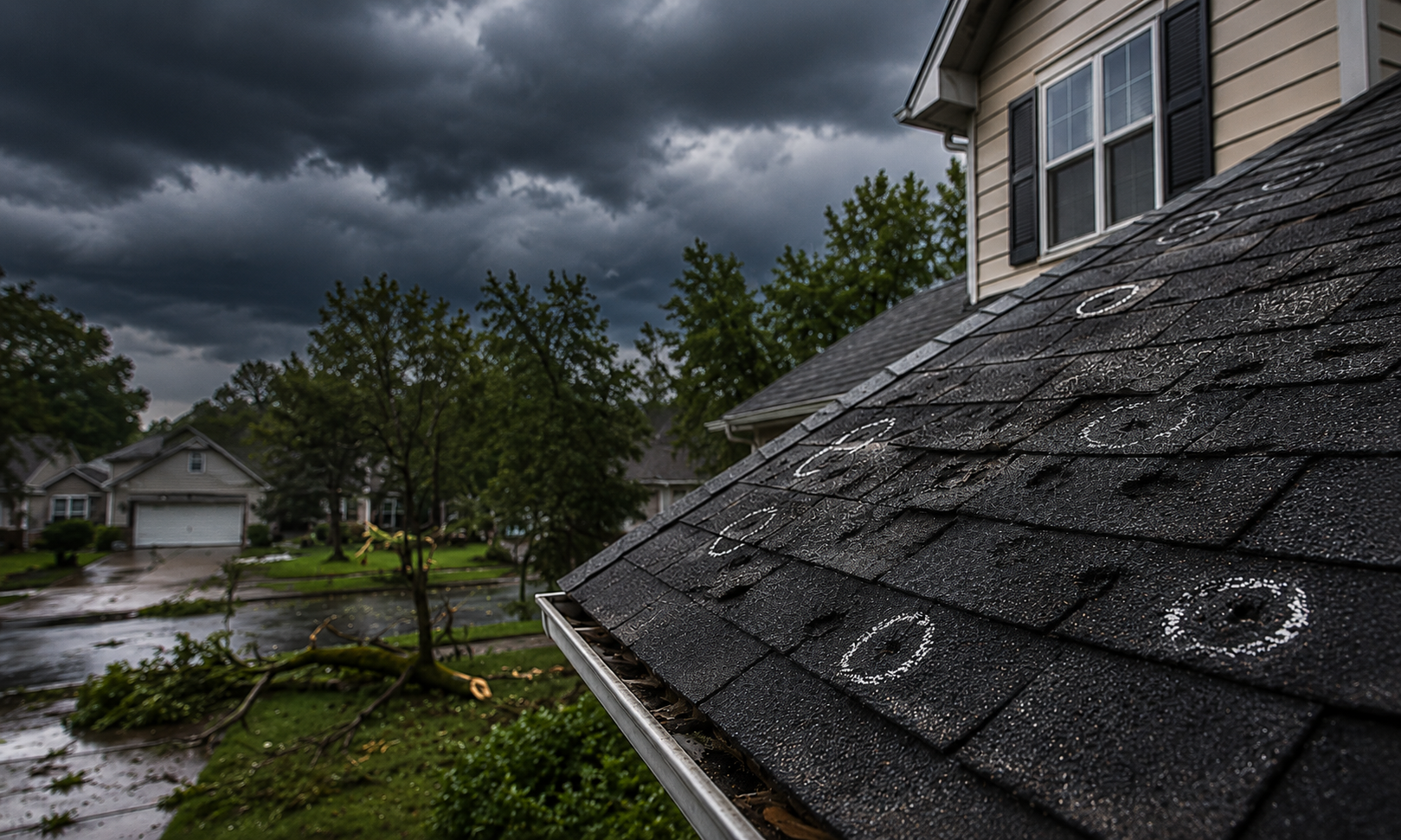
In Minnesota, Wisconsin, Iowa, North Dakota, and South Dakota, storms are not a “maybe.” They’re a “when.” Hail, wind, and heavy snow can all create roof damage that isn’t obvious from the ground but has real consequences over time.
That’s where roofing inspections and insurance claims come in.
Our commercial roofing team performs detailed inspections that look beyond obvious punctures. We document:
- Hail impact on membranes, shingles, or metal
- Wind damage at seams, edges, and penetrations
- Areas where water is ponding or where insulation may have been compromised
This documentation, combined with photos and condition reports, becomes the foundation for an insurance claim when damage meets your policy’s criteria. Instead of walking into a claim with a vague sense that “something’s wrong,” you’re walking in with professional, building-specific evidence.
From there, we help guide you through the insurance process:
- Meeting with the adjuster on site to review damage together
- Comparing the adjuster’s scope with what we see in the field
- Making sure the proposed repair or replacement plan addresses both immediate leaks and underlying issues
Insurance is rarely designed to “upgrade” your building just because you want nicer materials. Its job is to restore you to pre-loss condition according to your policy. But in the real world, a storm loss can be the right time to address known weaknesses, code changes, or performance problems that insurance alone won’t fix.
This is where financing and insurance intersect.
Insurance may cover a significant portion of the storm-related work, but not all of it. There might be:
- A deductible
- Code-required upgrades that weren’t part of the original system
- Elective improvements you want to make while the roof is open
Instead of cutting corners or walking away from those upgrades, many commercial owners use business loan financing to cover the gap. Insurance handles the covered loss. Financing covers everything else you choose to improve. Your building ends up in a far better position than it was before the storm, and your cash flow stays intact.
You Don’t Have to Figure This Out Alone
If you own or manage a commercial property in Minnesota, Wisconsin, Iowa, North Dakota, or South Dakota, you already know that roofing and storm damage are part of the job. The real question isn’t, “Will we ever have to deal with this?” It’s, “When it happens, will we be ready—and who will be in our corner?”
At Wolf River Construction, we see our role as more than just the crew on the roof. We’re here to help you:
- Understand the condition of your roof before and after storms
- Plan the right scope of work for your building and your business
- Navigate financing options that protect your cash flow
- Work through the insurance process so you’re not guessing at next steps
You don’t have to choose between protecting your property and protecting your budget. With the right combination of inspections, claims support, and financing or cash planning, you can move forward with confidence.
If you’re ready to talk about your commercial roof—whether you’ve just been through a storm or you’re planning ahead—our team is here to help. Schedule a roofing inspection, request a quote, or contact us to discuss financing options tailored to your business.
Your roof is critical to your operations. Let’s build a plan that protects both.