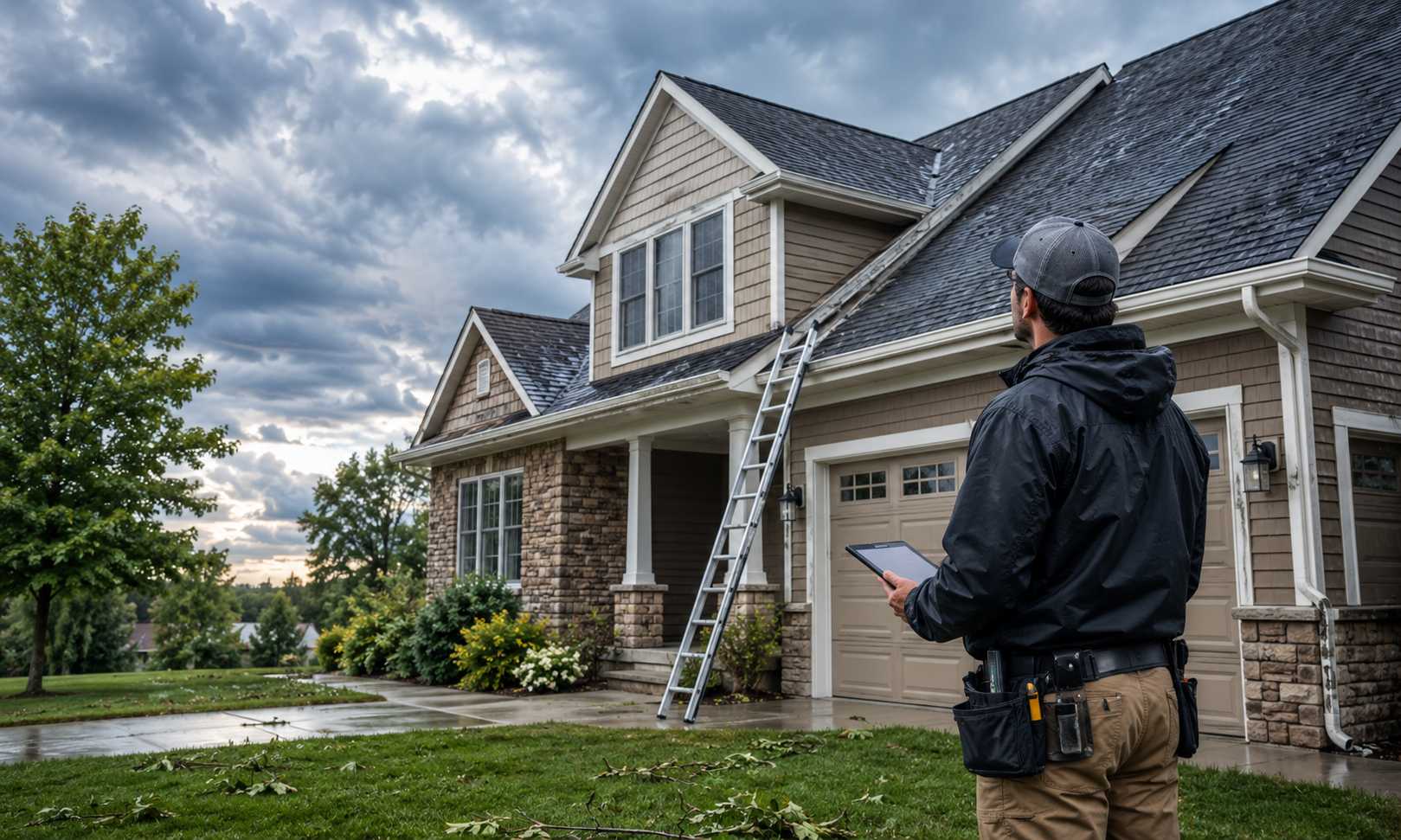

Hail damage is not always obvious from the driveway. A home can look normal after a summer storm while shingles, siding, vents, gutters or windows have sustained damage that deserves a closer look. Before snow and freezing temperatures arrive, Midwest homeowners should review the exterior and document anything that appears different.
Wolf River Construction provides storm damage and restoration services across Minnesota and throughout the Midwest. The purpose of an inspection is simple: understand the condition of the property and determine whether anything needs attention.
Where does hail commonly leave signs?
Roofing
Depending on hail size, wind and roofing material, impacts may affect shingles, metal components, vents, flashing or ridge materials. Asphalt shingles can sometimes show loss of surface granules, bruising or localized impact marks. Those conditions are difficult to evaluate safely from the ground, which is why a professional roof inspection is useful after a significant storm.
Learn more about Wolf River’s roofing services.
Siding
Hail can crack, dent or chip exterior cladding. Damage may be easier to spot when sunlight hits the wall at an angle. Look closely around corners, seams and elevations that faced the storm. Wolf River offers siding repair and replacement options for multiple siding materials.
Windows and exterior trim
Inspect glass, screens, frames and trim. Even if the glass is intact, impact can affect seals or surrounding components. Pay attention to any window that suddenly feels drafty, sticks, leaks or shows new damage after a storm.
Gutters, downspouts and metal surfaces
Dents in gutters, downspouts, vents or flashing can serve as useful clues that the property received meaningful hail impact. They do not tell you by themselves whether the roof needs repair, but they can help a professional understand the storm’s effects.
Why inspect before winter?
September and early fall provide a useful window between summer storm season and winter weather. If damage has affected water-shedding materials, allowing repeated rain, freeze-thaw cycles or snowmelt to reach the vulnerable area can create a larger problem.
Early inspection also gives you time to gather photographs, understand repair options and make decisions without the urgency of an active leak during a winter storm.
What can homeowners safely check themselves?
- Walk the property and photograph visible exterior damage from the ground.
- Check siding for dents, cracks, chips or loose sections.
- Look for dented gutters, downspouts and roof-edge metal.
- Check window glass, screens and frames.
- Look in the attic and ceilings for new staining or moisture.
- Note the approximate storm date if you know it.
- Avoid climbing onto a damaged, wet or steep roof.
What happens during a professional storm inspection?
A contractor can review areas that are not visible from the ground, evaluate the roof surface and exterior components, and photograph conditions that may require repair. If damage is found, the next step should be a clear explanation of what was observed, what options are available and which repairs are most important.
If an insurance claim may be involved, documentation can help you communicate with your insurer. Coverage, deadlines and claim decisions are determined by your policy and insurance carrier, so homeowners should review their own policy and ask their insurer specific coverage questions.
Do not forget the rest of the exterior
A storm does not recognize trade categories. The same hail cell can affect the roof, siding, windows and other parts of the property. That is one advantage of working with a construction team that can evaluate the exterior more comprehensively. Wolf River’s construction services cover roofing, siding, windows, weatherproofing and restoration work.
Frequently Asked Questions
Can hail damage a roof without causing an immediate leak?
Yes. Some storm-related damage may not create an obvious leak right away. That is why condition-based inspection matters after significant hail or wind.
Does every dent mean my roof needs replacement?
No. Exterior dents are clues, not a complete diagnosis. Repair recommendations should be based on the actual condition, extent of damage, materials and overall roof system.
Should I wait until I see water inside?
Visible water intrusion is a reason to act promptly, but it is not the only reason to inspect. If your home was directly affected by severe hail or wind, checking the exterior before winter can provide useful information even when the interior looks dry.
Can Wolf River inspect more than the roof?
Yes. Wolf River Construction’s storm and exterior services include roofing, siding, windows and broader restoration needs.
Know where your home stands before the first snow
If your neighborhood took a hit this summer, do not rely on a quick glance from the driveway. Connect with Wolf River Construction for a professional assessment and a straightforward explanation of what your home may need next.