October is one of the best times for Minnesota homeowners to find exterior problems before snow, ice and prolonged freezing temperatures make them harder to inspect and repair. A missing shingle, loose flashing detail or clogged gutter may look minor on a dry fall afternoon. Once snow accumulates and repeated freeze-thaw cycles begin, that same weak point can become a winter leak, drainage problem or ice-dam risk.
Wolf River Construction serves homeowners across Minnesota and the Upper Midwest with roofing services, siding, windows, gutters and exterior construction designed for the conditions we live in. A fall inspection is not about assuming the worst. It is about knowing where your home stands before the first lasting snow.
Why October Is the Right Time for a Minnesota Exterior Check
In Minnesota, the transition from fall to winter can happen quickly. Daytime temperatures may still be comfortable enough for exterior work while overnight freezes are already becoming more common. That window makes October practical for inspecting roofing, drainage and exterior seals before surfaces become snow-covered or icy.
Start with the systems that manage water. Your roof sheds precipitation, flashing protects transitions, gutters collect runoff and downspouts move that water away from the structure. When one part is compromised, the next winter storm can expose it.
1. Look for Missing, Lifted or Damaged Roofing Materials
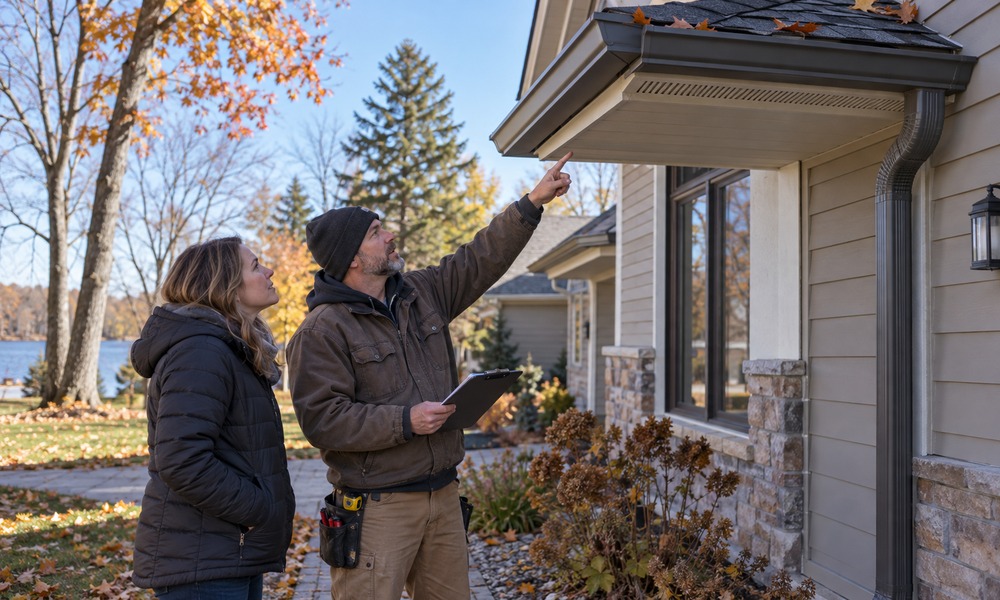
From the ground, look for obvious changes in the roof surface: missing shingles, lifted edges, damaged ridge materials or areas that appear uneven. Summer hail and wind can leave damage that is not immediately visible from the driveway, so a professional inspection is especially worthwhile if your neighborhood experienced severe weather.
Do not climb onto a steep, wet or frost-covered roof. Wolf River Construction provides professional roof inspections and storm-related exterior repair when hail, wind or other weather has affected the home.
2. Check Flashing Around Roof Penetrations
Chimneys, vents, skylights and roof-to-wall transitions rely on flashing to direct water away from joints. Loose, bent or deteriorated flashing can become a path for melting snow or wind-driven precipitation. Because water may travel before appearing inside, the interior stain is not always directly below the exterior problem.
3. Clean Gutters Before Leaves Freeze in Place
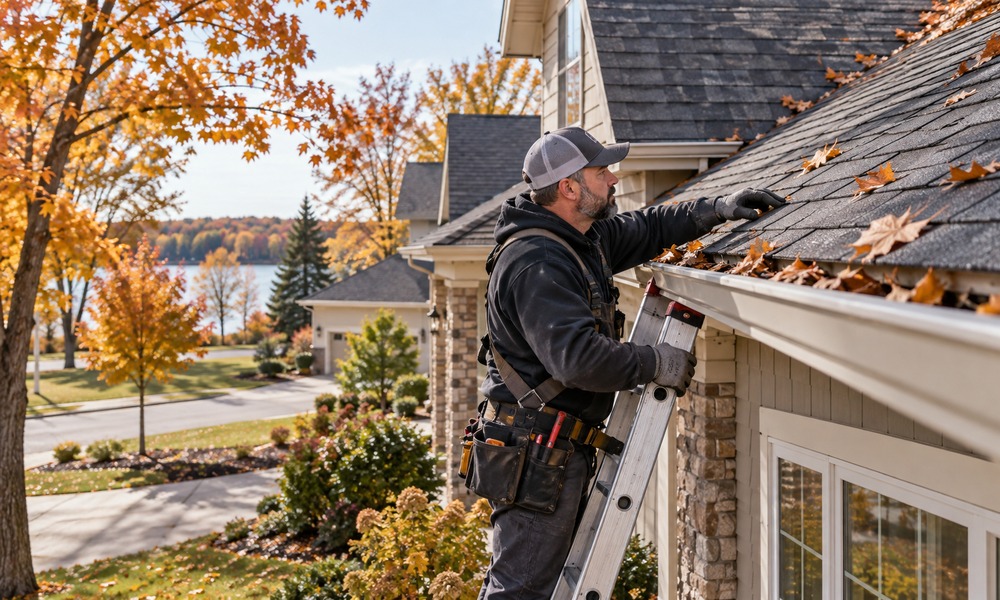
Gutters filled with leaves, pine needles and roofing debris cannot drain normally. Once temperatures fall below freezing, trapped debris can become a solid obstruction that holds water and ice at the roof edge.
Clean the system while it is safely accessible, confirm downspouts are open and make sure discharge is directed away from the foundation. If gutters are loose, pulling away from fascia or visibly damaged, address those conditions before snow load and ice add more weight.
4. Look at Soffit, Fascia and Siding Together
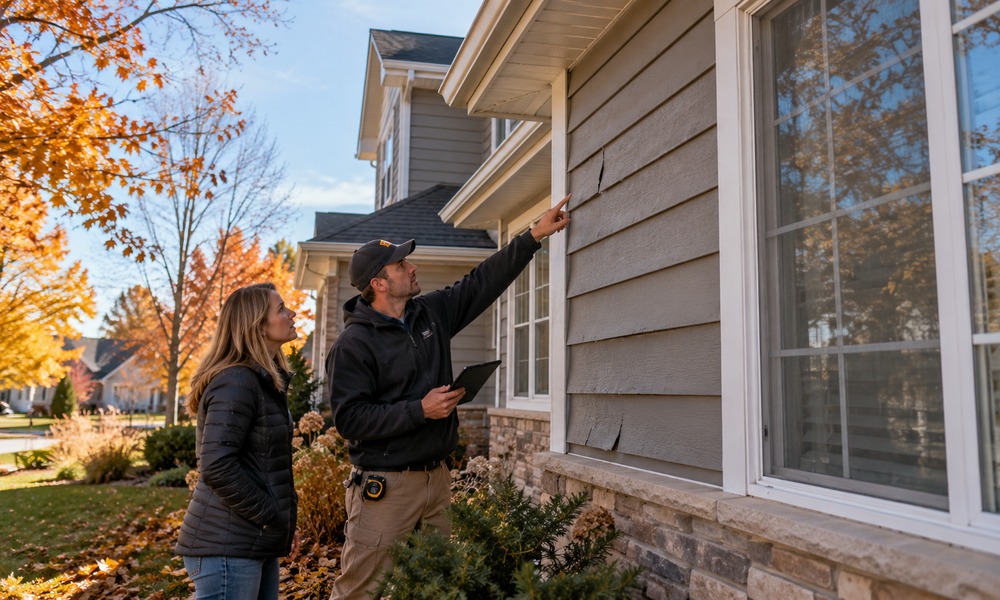
The roof edge is only one part of the exterior envelope. Damaged fascia can affect gutter attachment, while soffit conditions can influence ventilation. Cracked, loose or missing siding may also allow moisture to reach areas that should stay protected.
Wolf River provides siding installation and replacement along with broader exterior construction, making fall a good time to evaluate the whole exterior instead of treating each symptom separately.
5. Check the Attic for Moisture and Ventilation Clues
Inside the attic, look for staining, damp insulation, musty odors, visible frost from previous winters or daylight where it should not appear. Attic ventilation and insulation play an important role in winter roof performance because excessive heat escaping into the attic can contribute to uneven roof temperatures and ice-dam formation.
If you are unsure what you are seeing, take photos and have a professional evaluate the condition rather than disturbing insulation or roof components yourself.
6. Trim Tree Hazards Before Snow and Ice Add Weight
Branches that barely touch the roof in October can become much heavier after wet snow or ice. Have dead, damaged or overhanging limbs evaluated by a qualified tree professional, particularly when they are near power lines or difficult to access safely.
7. Pay Attention to Windows and Exterior Drafts
Winter preparation is also about comfort. If you already feel cold air around windows during October, the problem will usually become more noticeable as temperatures drop. Worn weatherstripping, failed exterior sealant or deterioration around the opening may allow unwanted air infiltration.
Wolf River’s exterior remodeling services include energy-efficient window replacement and weatherproofing, allowing window concerns to be evaluated alongside siding and other exterior components.
8. Photograph the Exterior Before Snow Covers It
A simple set of fall photos can be surprisingly useful. Photograph the roof from safe ground-level angles, siding elevations, gutters and areas that have required previous repair. If a winter leak or storm issue develops later, those photos provide a recent visual baseline.
Minnesota Fall Roof & Gutter Checklist
- Scan the roof from the ground for missing or visibly damaged materials.
- Have storm-exposed areas professionally inspected when appropriate.
- Check flashing, vents and roof-edge details.
- Clean gutters and downspouts before debris freezes.
- Look at soffit, fascia and siding for gaps or damage.
- Review attic areas for staining, moisture or ventilation concerns.
- Trim unsafe tree hazards with professional help.
- Check windows and exterior openings for drafts.
- Take current photos of the exterior before snow season.
Frequently Asked Questions
Should I have my roof inspected every fall?
Not every home needs the same inspection schedule. Roof age, tree cover, previous leaks and recent hail or wind all matter. If the roof’s condition is uncertain or the property experienced severe weather, a fall inspection can be particularly useful.
Can clogged gutters really affect the roof in winter?
Yes. Restricted drainage can hold water and ice at the roof edge and add weight to the gutter system. Clean drainage does not eliminate every winter roofing issue, but it removes one avoidable source of trouble.
Does one missing shingle mean I need a new roof?
No. Localized repair may be appropriate depending on the roof’s age, surrounding material and extent of damage. A professional evaluation can determine whether repair or replacement makes more sense.
Get the Exterior Ready Before Minnesota Winter Takes Over
The first heavy snow should not be the moment you discover the roof or gutter system needed attention. Contact Wolf River Construction for a fall exterior evaluation and make the repairs that matter while conditions are still workable.