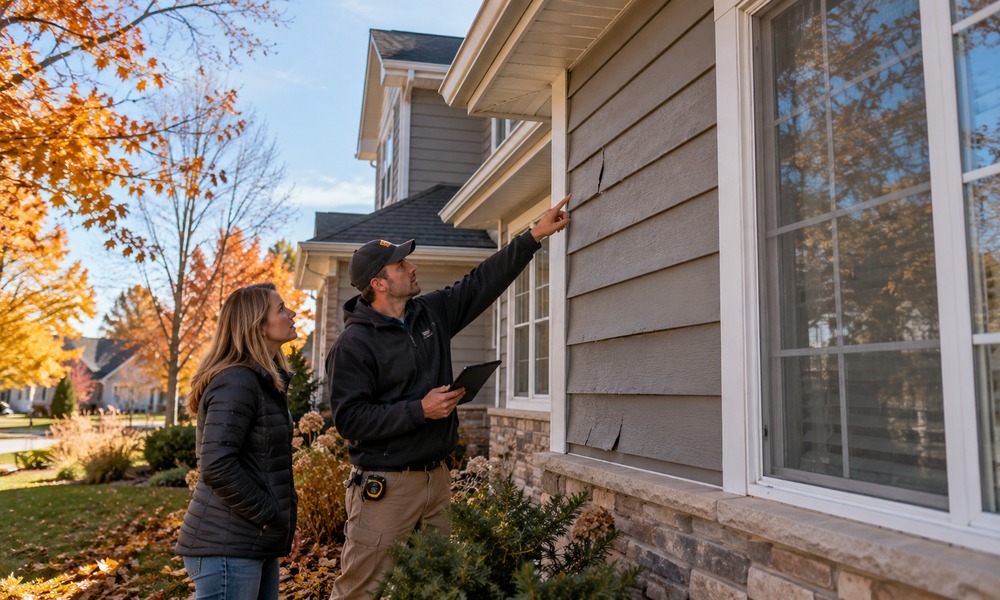
Siding is easy to overlook when it still looks good from the street, but in Minnesota it does much more than shape curb appeal. It is part of the exterior system protecting the wall assembly from wind, moisture, snow and large temperature swings. October is a smart time to look for damage because cracks, loose panels and failed sealant are easier to address before snow hides the problem and freezing temperatures make exterior work more difficult.
Wolf River Construction provides professional siding installation and replacement across Minnesota and the Upper Midwest, including engineered wood, steel, fiber cement, vinyl, soffit and fascia options built for demanding regional weather.
Why Siding Problems Matter More in Winter
Winter weather can amplify small exterior defects. Wind-driven snow can reach gaps that stayed dry during summer. Freeze-thaw cycles can widen cracks. Repeated moisture exposure can affect sheathing, trim and insulation behind the visible surface.
That does not mean every cosmetic imperfection requires replacement. The goal is to determine whether the siding is still securely attached, properly sealed and doing its job as part of the building envelope.
1. Cracked or Split Siding
Cracks are among the easiest warning signs to spot. They can result from age, impact, movement, hail or material deterioration. Even a small opening may allow moisture behind the exterior surface.
Walk around the home from ground level and look closely at high-exposure areas such as corners, walls facing prevailing winds and sections near driveways or landscaping where impact damage is more likely.
2. Loose or Lifted Panels
Siding should remain secure during normal wind. Panels or boards that appear to be pulling away from the wall may become more vulnerable during winter storms.
Do not simply push a loose section back into place without understanding why it moved. Fastener failure, warped material or damage behind the siding may need professional evaluation.
3. Warping, Buckling or Bowing
Siding that no longer lies flat can point to installation problems, moisture, heat movement or deterioration. The cause depends on the material, but visible movement is worth investigating before winter.
4. Gaps Around Windows, Doors and Trim
Transitions are common weak points because different materials meet and move differently. Check caulk joints and trim around windows, doors, utility penetrations and exterior fixtures.
Failed sealant can allow water and air into places that should remain protected. If the gap involves flashing or the siding assembly itself, simply adding a bead of caulk may not be the complete repair.
5. Stains, Soft Spots or Signs of Moisture
Discoloration does not always mean serious damage, but recurring stains, swollen material or soft areas deserve attention. Moisture behind siding can sometimes travel before becoming visible inside the house.
Check interior walls near suspicious exterior areas for staining, peeling paint or musty odors. Those clues can help identify whether the concern is only on the surface.
6. Peeling Paint or Interior Drafts Near Exterior Walls
If a room suddenly feels colder near one exterior wall, siding may not be the only possible cause, but it should be part of the investigation. Windows, insulation, air sealing and the wall assembly all work together.
Wolf River’s exterior-remodeling services include energy-efficient siding, window replacement and weatherproofing, allowing the home to be evaluated as a system rather than assuming one product is responsible for every comfort issue.
7. Damaged Soffit or Fascia
Soffit and fascia help protect the roof edge and support ventilation and gutter attachment. Damage in these areas can create winter problems even when the main siding field looks fine.
Look for loose sections, rot, staining or gaps around the eaves. These areas are especially important where gutters connect to the fascia.
8. Hail or Storm Damage You Never Had Inspected
Summer hail can affect siding without creating an obvious hole. Dents, cracks or loosened sections may be easier to identify when a professional knows what to look for.
If the property experienced a significant storm and the exterior was never inspected, October is a better time to review it than after the first winter leak or wind event.
Repair or Replace? How to Think About the Decision
Localized damage may be repairable when the siding is otherwise in good condition and matching material is available. Replacement becomes more worth considering when deterioration is widespread, moisture is affecting several areas, the siding has reached the end of its service life or the homeowner also wants improved energy performance and curb appeal.
October Siding Checklist for Minnesota Homeowners
- Look for cracks and splits.
- Check for loose or lifted siding.
- Watch for warping or buckling.
- Inspect window and door transitions.
- Look for stains, softness or swelling.
- Check soffit and fascia.
- Review previous hail and wind exposure.
- Photograph problem areas before snow arrives.
Frequently Asked Questions
Can damaged siding make a home feel colder?
It can contribute to building-envelope problems, but drafts can also come from windows, doors, insulation and air-sealing gaps. A proper evaluation should consider the whole exterior wall system.
Should I replace siding before winter?
If the siding is allowing moisture in, pulling away from the home or has widespread damage, waiting through another Minnesota winter may create additional risk. The right timing depends on material, weather and project scope.
What siding materials does Wolf River Construction install?
Wolf River lists engineered wood, steel, fiber cement, vinyl, soffit and fascia among its residential siding options.
Protect the Walls Before Minnesota Winter Tests Them
Siding problems are easier to solve when they are still dry, visible and accessible. If you see cracks, loose panels, moisture concerns or exterior deterioration, contact Wolf River Construction about siding repair or replacement before winter weather turns a small weakness into a bigger project.